
This Sunday, we begin an exciting new teaching series at Breakfast Church – Women in the Bible. Over 8 months in 2026 we will look at eight women who are often found in the margins of the Bible (a few verses here and there) and yet their stories of life and faith can both inspire and teach us much.
Whilst we have beautiful books of the Bible named after women – such as Ruth and Esther – we must acknowledge that most of the biblical story was written primarily by men in an era where the social profile of women was vastly different from our modern day experience. In the ancient Near East, women’s lives were often defined by the private sphere, and their voices were rarely given the same legal or social weight as those of men.
Yet it is precisely within this patriarchal framework that the Holy Spirit breathes and creates a different story. When we listen closely and reflect on the lives of these women, we discover a ‘subversive’ grace. We see women who didn’t just follow the rules of their day, but who acted with a courage and bravery that changed the course of history. It’s no wonder that they were mentioned; to leave them out would have deprived us of so much that all of us can learn from.
It’s in the Gospels where we most clearly see that women were not merely ‘extras’ in the story of Jesus; they were pivotal to his ministry. In Luke 8, we read of Mary Magdalene, Joanna, and Susanna, who travelled with the twelve and supported Jesus’ mission out of their own resources. They were the silent engines of the early movement, providing the practical means for the Gospel to be preached.
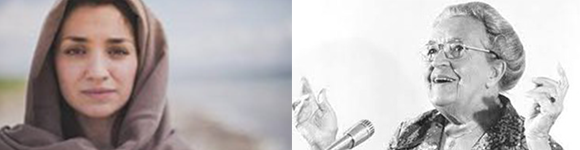
Perhaps most poignantly, it was the women who demonstrated the most steadfast loyalty at the end. When many of the male disciples fled in fear after the arrest in Gethsemane, it was the women – including Mary the mother of Jesus, Mary Magdalene, and Mary the wife of Clopas (John 19) – who stood faithfully alongside the cross. They bore witness to his suffering when the world had turned its back.
I’ve always found it deliciously subversive that on Easter Day the first appearance of the risen Christ was not to the ‘inner circle’ of the twelve, but to Mary Magdalene and her companions. In a culture where a woman’s testimony was not legally admissible in court, Jesus chose them to be the first apostles to the apostles! He entrusted the most important news in human history to the very people society deemed untrustworthy. By doing so, Jesus validated their voice and their witness forever.
Of course this legacy of female witness did not end in the first century. Throughout history and into our modern world, women have continued to be the “brave heralds” of the faith. We think of figures like Corrie ten Boom, whose faith shone in the darkness of a concentration camp, teaching the world about the radical power of forgiveness and Mother Teresa, who saw the face of Christ in the “poorest of the poor” in Calcutta, witnessing to the Gospel through tireless service.
Closer to home, the Gospel lived out every day by the women in our own pews – mothers, teachers, NHS workers, doctors and nurses, administrators, professors, accountants, business owners and much more besides – who stand at the “crosses” of our modern world and proclaim the hope of the resurrection.
Join us as we explore these powerful stories together. Whether you are a regular member or visiting for the first time, there is a place everyone – be that at Breakfast Church from 9.40am at St Mary’s, (where we’ll be consider the story of Sarah in Genesis and her laughter and patience), or a traditional service at St Swithun’s at 10.00am which will focus on the set lectionary reading (from Matthew 4), for this first Sunday of Lent.
Whichever service you choose, we trust that you will be inspired and encouraged as we follow Jesus together, drawing strength from the examples of faith we have been given through the ages.
Revd Paul